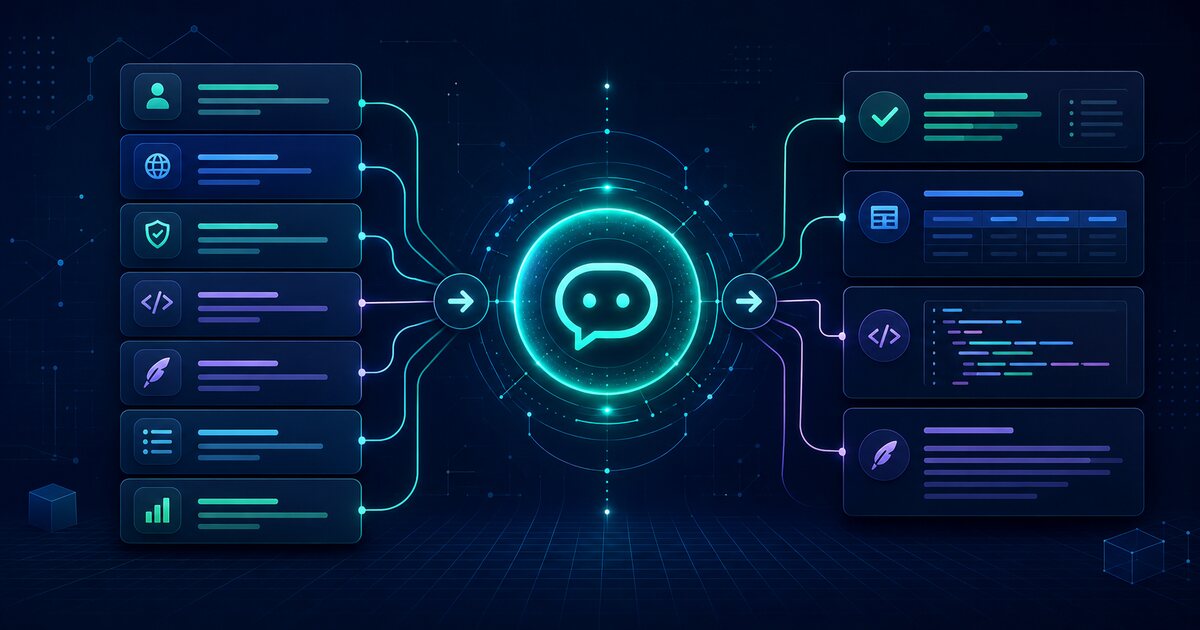
This ChatGPT cheat sheet helps you write clearer prompts and get more useful, reliable responses from generative AI. Instead of treating ChatGPT like a search engine, use structured instructions that define the role, task, audience, context, constraints, and desired output format. The frameworks and copy-ready templates below cover practical use cases for business, marketing, content creation, and coding.
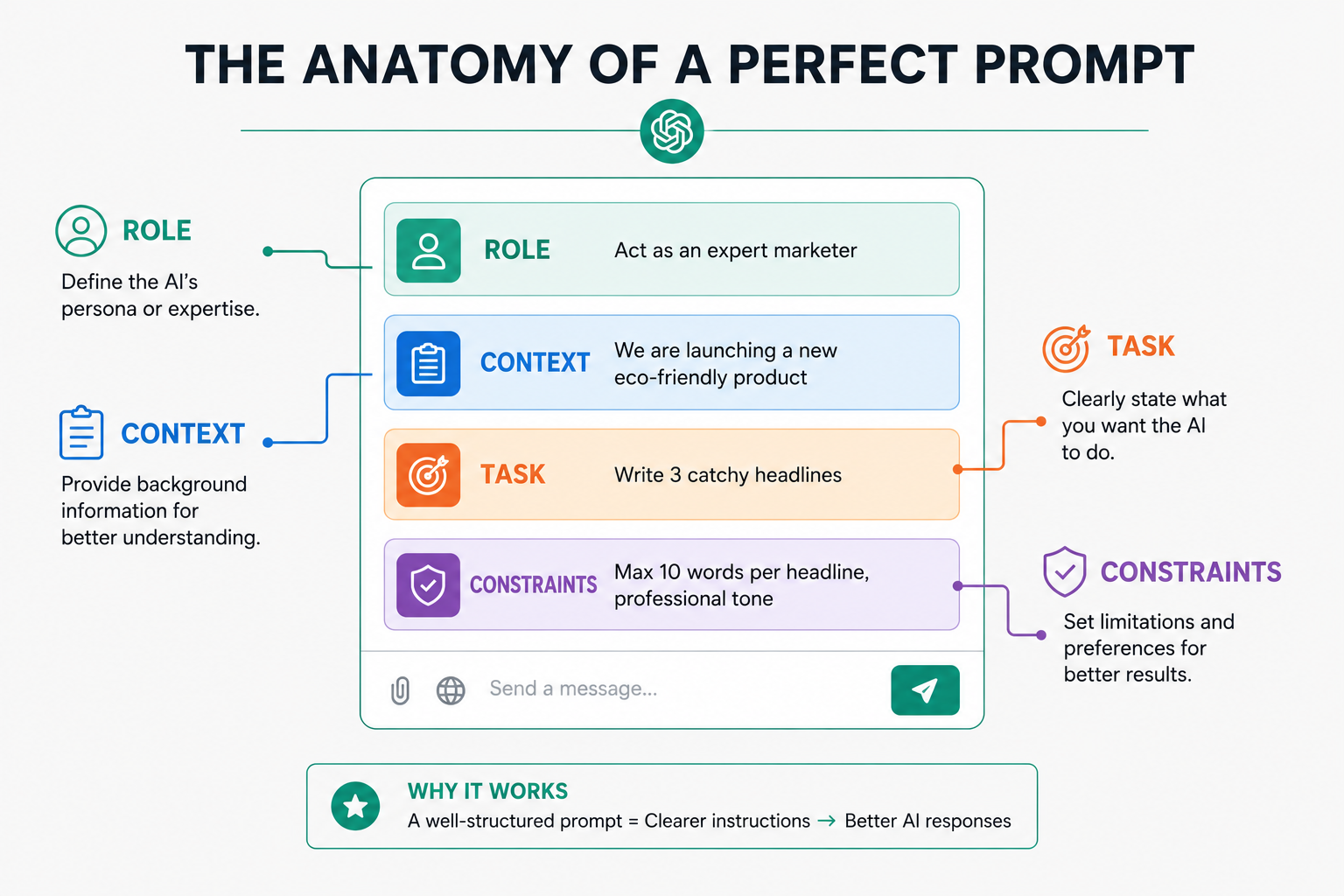
Figure: The 4-step structural framework for writing high-converting AI prompts.
1. ChatGPT Cheat Sheet: The CREATE Framework
Instead of writing short, vague commands, use the CREATE framework to structure every single prompt for flawless results.
| Letter | Element | What it Means | Example Snippet |
|---|---|---|---|
| C | Character | Assign a specific expert role to the AI. | “Act as a veteran SEO expert and copywriter…” |
| R | Request | Clearly state what you want the AI to build. | “…write a 500-word blog post introduction…” |
| E | Examples | Give a sample of the tone or style you want. | “…use a tone similar to this: [Insert Sample]…” |
| A | Audience | Define exactly who will read or use the output. | “…tailored for tech entrepreneurs and beginners…” |
| T | Type / Format | Specify the output layout (tables, bullets, markdown). | “…Format the output as a Markdown list with bold keywords…” |
| E | Exclusions | Tell the AI what to avoid or skip entirely. | “…Do not use corporate jargon or passive voice.” |
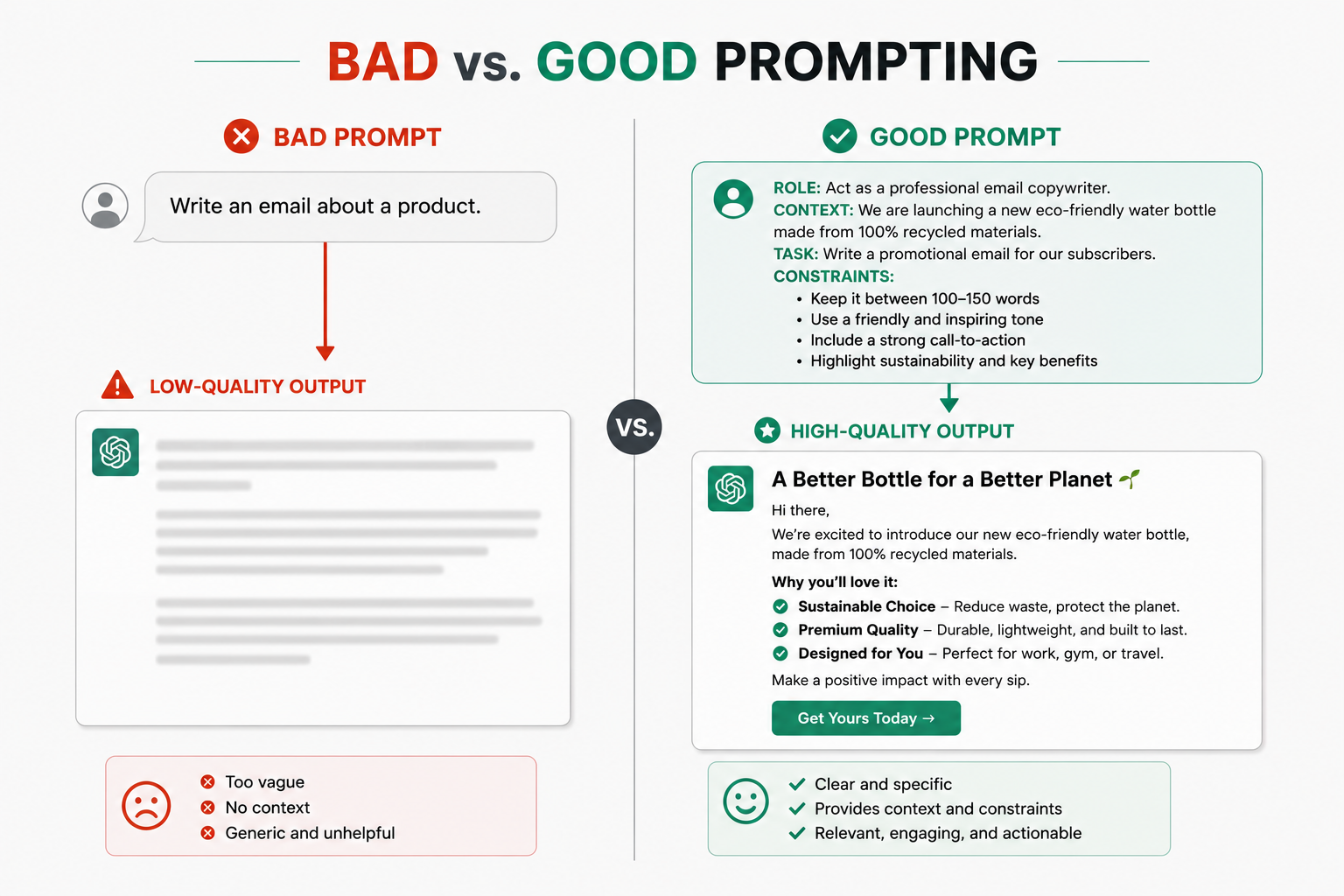
Figure: Comparing a generic one-line prompt with a highly structured prompt to maximize AI output quality.
2. High-Leverage Copy-Paste Master Prompts
Save these exact structures to bypass creative blocks and instantly generate high-value commercial assets.
1. The Ultimate Content Summarizer
- Prompt:
Act as a professional researcher. Summarize the following text into a clean markdown bulleted list. Extract the top 3 key takeaways, 2 actionable steps, and 1 core conclusion. Text: [Insert Text]
2. The B2B Cold Email Generator
- Prompt:
Act as an elite SaaS copywriter. Write a short, high-converting cold outreach email targeting [Job Title] about our service [Service Name]. The email must be under 150 words, include a clear value proposition, and end with a soft call-to-action. No corporate fluff.
3. The Code Debugger & Explainer
- Prompt:
Act as a Senior Full-Stack Developer. Review the following code snippet. Identify any syntax errors, security vulnerabilities, or performance bottlenecks. Provide the corrected version of the code and a short 2-sentence explanation of what went wrong. Code: [Insert Code]
3. Advanced Modifiers to Instantly Refine Outputs
Add these single-sentence modifiers to the end of any prompt to instantly upgrade the quality of ChatGPT’s response.
- To fix the tone: “Write in a conversational, human-like tone. Use short sentences under 15 words and avoid complex jargon.”
- To force deep research: “Explain your reasoning step-by-step before delivering the final answer so I can see your logic.”
- To avoid generic AI text: “Do not use typical AI filler phrases like ‘In conclusion’, ‘Delve deeper’, ‘It is important to note’, or ‘Furthermore’.”
4. Frequently Asked Questions (FAQ)
What is the difference between a prompt and prompt engineering?
A prompt is simply the question or command you type into an AI tool. Prompt engineering is the strategic practice of structuring that command with specific parameters (like roles, constraints, and formats) to consistently get the highest quality output possible.
Why does ChatGPT sometimes give incorrect facts (hallucinations)?
ChatGPT is a language model designed to predict the next most logical word in a sentence, not an absolute truth database. To minimize hallucinations, always provide the AI with raw text/data source to analyze, or explicitly tell it: “If you do not know the answer based on facts, state ‘I do not know’.”
ChatGPT Cheat Sheet Resources
Use this ChatGPT cheat sheet together with these official references and related free guides to continue improving your prompts.